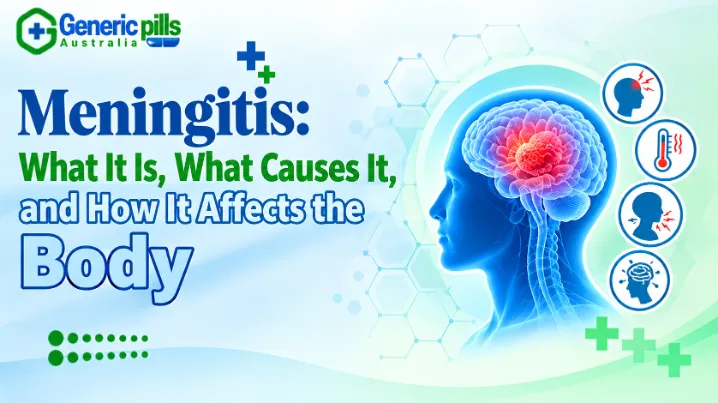
Meningitis: What It Is, What Causes It, and How It Affects the Body
- Smart Pills
Written by Roman Kenndy
- Medically reviewed by Dr. Roman Kennedy
1. Introduction
Meningitis is a medical condition that one may assume to be frightening, but what really is it?
To put it plainly,l this Meningitis is the inflammation of the brain and spinal cord’s protective coverings, which can be caused by numerous things. Among those causes, some are infectious, while many happen because of non-infectious reasons.
Let us help understand that it’s not what most people think it is, which is a single illness, because there can be many forms of Meningitis in humans. There can be;
- Bacterial meningitis,
- Viral meningitis,
- Fungal meningitis, and
- Other types can behave very differently.
And for that reason, it’s so crucial to first identify which kind of Meningitis it is.
There are some forms that can be improved and managed with supportive care only, while some may require urgent treatment.
So, let’s not waste time and have a look at all the aspects of this illness, including;
- What causes meningitis,
- What the symptoms can look like,
- How it affects the body, and
- When medical help is needed.
2. What Is Meningitis?
The human
Both the brain and spinal cord of human beings are protected by not one but three protective layers that we, in medical terms, call meninges. Indian abnormal circumstances, when these layers become inflamed, that sort of medical phenomenon is known as meningitis.
There are not one but many reasons because of which this kind of inflammation occurs in the meninges. It can be caused by bacteria or viruses; moreover, some fungi and parasites are also responsible for inflammation.
Although there are some sort of soft medicines for infections, infections, cancers, injuries, and various inflammatory conditions can be the reason behind non-infectious meningitis as well.
But we have to know the cause of this inflammation, because bacterial meningitis specifically can be life-threatening. Why love the other hand while meningitis and other inflammations of this kind are less severe but they still can cause seriousness some selected people.
And for that reason, we just can’t sit at home and guess what kind of meningitis it is by reading terms only.
3. What Causes Meningitis?
As mentioned above, there is more than one cause behind this inflammation, so let’s understand the most crucial ones.
➨ Bacterial infections
There are several types of bacteria in the atmosphere that have the capability of causing inflammation, which can spread fast and in an intense manner, and end up causing severe Inflammation.
And for that reason bacteria meningitis can be termed a medical emergency, which, over time, can grow and worsen very quickly. In this sort of inflammation, there can be more than one complication in the patient, such as brain damage, hearing loss, seizures, and even death.
That is the very reason that bacterial meningitis is considered a medical emergency and requires medical attention as soon as possible.
➨ Viral infections
Viruses are another major cause.
There are multiple viruses that can cause this inflammation, which is known as viral meningitis. Among them, enteroviruses are considered the common cause, while influenza viruses, herpes viruses, and others are potential causes of this inflammation.
A meningitis viral infection can sometimes be mild, but that does not mean every case is harmless.
➨ Fungal and other causes
When we compare it to bacterial and viral meningitis, the incidence of fungal meningitis are fewer, and are found in people with weak immune systems.
However, there are some parasites and some form of rare organisms so carries the capability of causing what we call meningitis.
There are also non-infectious forms. These can be associated with conditions such as cancer, certain medicines, or inflammatory diseases.
4. Types of Meningitis
When people search for the types of meningitis, they often expect a simple list. The main types include:
- Bacterial meningitis
- Viral meningitis
- Fungal meningitis
- Parasitic meningitis
- Amoebic meningitis
- Non-infectious meningitis
The first two are especially important because they are relatively common and have very different treatment approaches.
➨ Bacterial Meningitis
The progression of bacterial meningitis is quick. Below are the common symptoms that can be found in the patient;
Common symptoms may include:
- Fever
- Severe headache
- Stiff neck
- Nausea or vomiting
- Sensitivity to light
- Confusion
Though every patient will likely experience the above-listed symptoms, bacterial meningitis can become serious rapidly, and it requires prompt medical assessment right away.
➨ Viral Meningitis
You can say that, in comparison to bacterial meningitis, viral meningitis is much more common these days.
Some people can recover from this medical condition, while a set of viruses can worsen the condition of a patient by causing serious health problems.
Though viral meningitis is much less severe than bacterial meningitis, we still cannot take it easily, and we must act promptly.
5. What Are the Symptoms of Meningitis?
A person having knowledge of the common meningitis symptoms can act promptly when medical attention is required, so let’s have a look at those common symptoms;
- Fever
- Headache
- Stiff neck
- Nausea
- Vomiting
- Sensitivity to light
- Confusion or changes in mental alertness
The classic combination of fever, headache, and stiff neck is often associated with meningitis, but symptoms can vary from person to person.
And there is an important point to remember:
You do not need to have every symptom to have meningitis.
6. What About a Stiff Neck in Viral Meningitis?
A stiff neck can occur with viral meningitis, just as it can with bacterial meningitis.
However, a stiff neck alone does not tell you which type of meningitis someone has.
It can also happen because of many other conditions.
So searching for “stiff neck viral meningitis” may give you useful information, but it cannot replace an examination by a healthcare professional.
7. Meningitis Symptoms in Babies and Children
Meningitis can be harder to recognise in babies.
Very young children may not show the typical signs seen in adults.
Possible signs include:
- Irritability
- Poor feeding
- Vomiting
- Reduced activity
- Unusual crying
- Being difficult to wake
- Bulging of the soft spot on the baby’s head
As for the CDC, babies may have different symptoms than older children or adults, so if a baby is getting unwell for a short period of time, we do have to seek medical assistance right away.
8. CMV Meningitis: What Should You Know?
Cytomegalovirus, or CMV, is a common virus from the herpesvirus family.
Most of the healthy people who have CMV may not develop some sort of serious illness, but it still can cause severe disease, especially in people living with a weakened immune system.
There can also be some rare medical conditions where the CMV somehow reaches the central nervous system end up affecting it with meningitis or some other form of neurological disease.
But the symptoms of CMV meningitis can easily overlap with various other forms of meningitis, where a person may have mental confusion, fever, headache, or some other sorts of neurological symptoms.
For that reason, one just can’t self-confirm CMV meningitis symptoms on their own, because even doctors may require some tests or other forms of Investigation to identify it.
9. How Does Meningitis Affect the Body?
Let’s try to understand how meningitis affects a person’s body. So first of all, some sorts of infection, or another medical condition made trigger the effects of meningitis, for which the body’s immune system starts to respond.
And that is how meningitis inflammation is caused around the brain and spinal cord.
That inflammation can contribute to symptoms such as:
Inflammation → irritation around the brain and spinal cord → headache, neck stiffness, fever, and other symptoms.
In more serious cases, inflammation and infection can affect the brain and other parts of the nervous system.
Possible complications include:
- Seizures
- Hearing problems
- Neurological problems
- Brain damage
- Sepsis
- Long-term disability
- Death
As per the WHO, Meningitis can be the reason behind some serious long-term health issues that include neurological disability, loss of hearing, and various other medical complications.
10. How Is Meningitis Diagnosed?
Even healthcare professionals cannot identify the exact form of meningitis from its symptoms alone; therefore, to identify the bacterial, viral, fungal, or any other form of meningitis, your doctor may consider;
- Medical history
- Physical examination
- Blood tests
- Cerebrospinal fluid testing
- Imaging or other investigations when needed
Even a lumbar puncture can be used to collect cerebrospinal fluid for testing, through which doctors can identify the cause of meningitis and decide the right meningitis treatment right away.
11. Meningitis Treatment: Does Everyone Need Antibiotics?
No.
First, we have to identify the form of meningitis because the treatment depends on what has caused the inflammation.
➨ Bacterial meningitis
As mentioned above, bacterial meningitis can cause severe health problems in a very short period of time, so it may require prompt medical treatment right away; for that reason, antibiotic medications are used to fight the bacteria.
The doctors may consider treatment right away when bacterial meningitis has been diagnosed because it can be very dangerous.
➨ Viral meningitis
Many people with mild viral meningitis can easily recover, with some sort of supportive care only, but in some cases, the treatment would depend on the virus involved and how sick the person is.
In some cases, doctors may use anti viral medicines, such as for some herpesvirus infections, for which is it getting used.
This is why we can’t consider that every “Viral Care” would be about treating all viral infections in the same exact way.
➨ Other types
Different treatment approaches can be considered by the doctor for fungal, parasitic, and other forms of meningitis.
Henceforth, there can’t be a single medication that would be able to treat all forms of meningitis.
12. When Is Meningitis an Emergency?
This is one of the most important things to remember.
If someone develops symptoms that could indicate meningitis, especially:
- Severe headache
- Fever
- Stiff neck
- Confusion
- Seizures
- Significant drowsiness
- Rapid deterioration
Urgent medical attention will be required in these conditions. Specifically in Australia, if someone is seriously unwell or requires immediate emergency assistance, one should call 000 right away.
Meningococcal disease is another serious condition, which can be the reason behind meningitis or some sort of bloodstream infection. Henceforth, the Australian Government has advised prompt medical assessment and treatment, as meningococcal disease can progress rapidly.
14. Can Meningitis Be Prevented?
Not every form of meningitis can be prevented, but there is strong evidence, which suggests that, through vaccination, we can lower the risk of various infections leading to meningitis.
Vaccines are available against diseases such as:
- Meningococcal disease
- Pneumococcal disease
- Haemophilus influenzae type b
- Measles
- Mumps
- Chickenpox
And the Australian Government’s immunisation program almost covers all the vaccines required to provide protection against multiple diseases associated with meningitis.
Hygiene also plays a key role here, because it can help reduce the spread of some infections. And when we mention good hygiene, we mean regular hand washing, avoiding contact with sick people, and more.
15. Meningitis vs Meningococcal Disease: Are They the Same?
Not exactly.
This is an easy point to mix up.
Meningitis stands for inflammation of the meninges, while meningococcal disease is an infection that can be caused by the bacterium Neisseria meningitidis.
This infection can further cause meningitis; however, it can also cause serious issues in the bloodstream, an infection we call meningococcal septicaemia.
So, while we can consider meningococcal disease as one of the possible causes of meningitis, we should be aware that not every case of meningitis would be caused by meningococcus.
16. What Should You Remember About Meningitis?
Meningitis can have many causes, and not all cases are the same, or require the same form of prevention, or even medications. So, wherever, above given symptoms of this inflammatory condition arise, please make sure to seek prompt medical care.
Here is the summarised information that includes almost all the most important points, so please have a look:
- Meningitis means inflammation of the protective layers around the brain and spinal cord.
- Viruses and bacteria are important causes.
- Bacterial meningitis can become life-threatening very quickly.
- Viral meningitis is often less severe but can still cause serious illness.
- Symptoms can include fever, headache, and stiff neck.
- Symptoms alone cannot identify the cause.
- Antibiotics treat bacterial infections, not viral infections.
- Some viral causes may require antiviral treatment.
- Vaccination can prevent some causes of meningitis.
- Suspected meningitis needs prompt medical assessment.
If you are worried about symptoms in yourself or someone else, don’t rely on an internet search alone; get medical advice. And if you want to obtain medications for meningitis, you can just order them from Generic Pills Australia.
17. Frequently Asked Questions
The medical information in this article is based primarily on government and major public-health organisations:
What is meningococcal? Why childhood immunisations are important