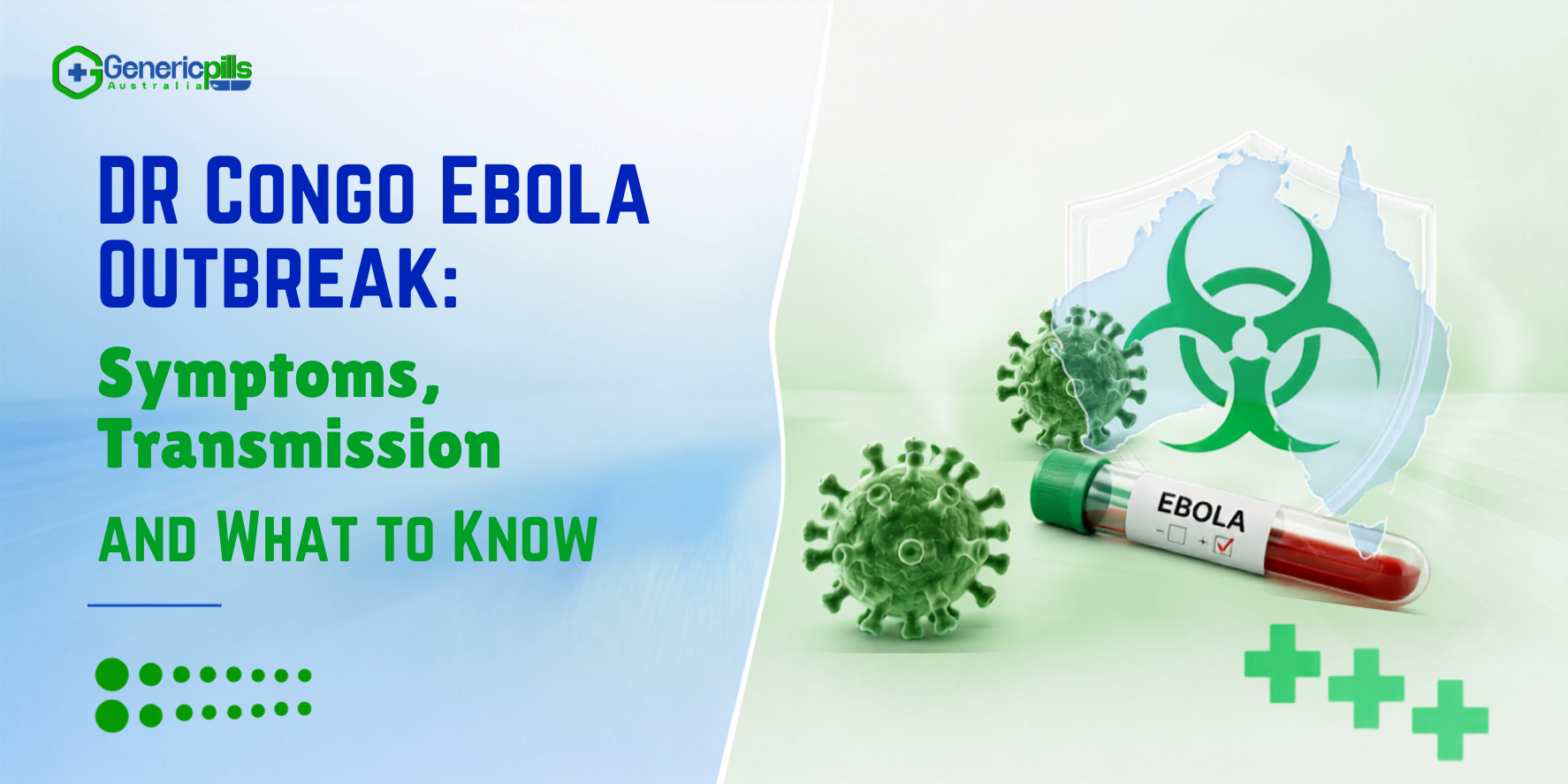
DR Congo Ebola Outbreak: Symptoms, Transmission and What to Know
- Antibiotics
 Written by Same Luise
- Medically reviewed by Dr. Roman Kennedy
1. Introductions
The Democratic Republic of the Congo is currently considering a response to an Ebola outbreak caused by the Bundibugyo virus. The DR Congo Ebola outbreak was, however, declared in May 2026 in northeastern Ituri Province.
But this has been the major public health concern, reported on 17 May 2026; WHO even determined as a Public Health Emergency of International Concern (PHEIC).
As per the latest WHO update and published, in August 2026, the transmission in the DRC remains intense and with sustained transmission across interconnected geographic clusters.
2. What Is Ebola?
Ebola virus disease (EVD) is one of the rate but a serious viral illness, that can cause severe disease and may be fatal. Several Ebola virus species are known and this includes-
3. Bundibugyo
Zaire
and Sudan viruses (which have caused a major outbreak in Africa). The current DR Congo Ebola outbreak is being caused by Bundibugyo virus, rather than the Zaire ebolavirus responsible for several previous Ebola outbreaks. This particular distinction is important because vaccines and treatment developed for one Ebola virus species does not necessarily offer the same protection against another.
Moreover, the current outbreak: the WHO even reports that the Bundibugyo virus disease has received no licensed vaccine or specific treatment. Thereby, this makes possibility for an-
- early detection
- supportive care
- infection prevention
- outbreak-control measures are particularly important.
4. Where Is the Current Ebola Outbreak in the DRC?
The 2026 DR Congo Ebola virus outbreak was first confirmed in Ituri Province in northeastern DRC. The response, however, has expanded, as transmission has continued across interconnected areas. WHO and their partners are also working with NHA towards the proper- genericpillsaustralia
case detection
proper surveillance
contact follow-up
prevention towards infection
and also treatment and community engagement.
are working with national health authorities on surveillance, case detection, contact follow-up, prevention of infection, treatment and community engagement.
Additionally, the DRC has an extensive experience in responding towards the Ebola in DR Congo outbreaks. Yet the currect outbreak does signifies, the challenges and majorly because of the sustained transmission and geographic spread.
5. What Are the Symptoms of Ebola?
The different Ebola infection symptoms are-
- Muscle pain
- Sore throat
- Sudden fever
- Severe weakness
- Rash
- Internal bleeding
- Vomiting
- External bleeding (in some areas)
- Diarrhoea
- Impaired kidney or liver function
All of these are reported to be the Ebola outbreak symptoms and hence care is required from starting.
6. How Does Ebola Spread?
The Ebola virus disease mainly spreads through either contact with blood or other bodily fluids of an infected person. Transmission is mainly seen through-
- sweat
- saliva
- urine
- breast milk
- vomit
- semen
- other body fluids
7. Different causes of Ebola outbreak?
The Ebola outbreak causes are as follows-
Transmission can be from animal to human, where the Ebola virus easily enters the human body through contact with infected wildlife such as bats/primates.
Next is from human to human, and results through direct contact with either blood or bodily fluids (of an infected person).
Could be from contaminated objects, like-
- bedding
- clothing
- medical equipments
- and other items
Unsafe burial practices: contact with the body of an Ebola patient who has died can spread infection.
There can be an exposure with workers who are at risk, and when proper control or protection is not followed.
8. What to do when exposed to ebola?
When you come into contact with Ebola transmission in DR Congo, or have been to an infected individual, it is advisable to consult a doctor on an immediate basis.
Though it is not advisable to manage the outbreak on your own, either at home or by taking guidance from unknown. But this requires you to connect with a medical expert and take early prevention.
In this manner the desired Ebola prevention can be obtained by individuals.
9. What Is Being Done to Control the DRC Outbreak?
The DRC government, WHO, Africa CDC and even other partners, are working on multiple aspects to control Ebola outbreak in DR Congo. This majorly involves-
infection prevention and control
clinical care
Early case detection
Protection of healthcare workers.
Laboratory testing
Community engagement
Safe and dignified burials
Contact tracing and follow-up
10. Is the DRC Ebola Outbreak a Global Pandemic?
The WHO has determined- dr congo ebola, as one of the major public health emergencies of international concern. Yet not a pandemic emergency; moreover, here PHEIC indicates an extraordinary public health event that does require coordinated international action. But this does not means that this particular disease is spreading globally across countries. The condition can change and while taking the desired preventive measures guided by expert.